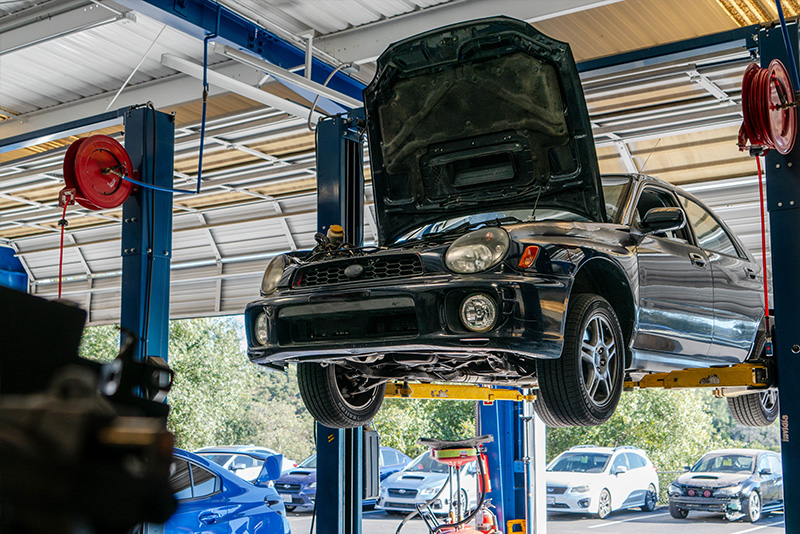
Subarus are everywhere in Auburn for a reason. Between the snow on I-80, gravel roads in the foothills, and the occasional fire evacuation route nobody planned on driving, all-wheel drive isn't a luxury here. It's a necessity. And Subaru's boxer engine and symmetrical AWD system deliver.
But after years of working on these cars at M45 Automotive, we can tell you exactly where they start to show their age. Here are the five repairs that land on our lifts most often, and what you can do to stay ahead of them.
Head Gaskets: The Repair Every Subaru Owner Hears About
Subaru's horizontally opposed boxer engine sits flat instead of upright. That layout gives you a lower center of gravity and better handling, but it also puts the head gaskets in a tough spot. Gravity works against the seal over time, and heat cycles do the rest.
Models built between 2000 and 2015 are the worst offenders. The 2.5-liter naturally aspirated engines from that era are especially prone to it.
What to Watch For
- Your coolant level keeps dropping but you don't see a puddle in the driveway. That's an internal or external leak that hasn't turned catastrophic yet.
- White smoke from the exhaust on startup or under load. That's coolant getting into the combustion chamber.
- Your temperature gauge creeps higher than normal, especially in stop-and-go traffic or on long climbs up the hill toward Colfax.
- Oily residue or dried coolant tracks on the outside of the engine near the gasket seam.
A small external leak caught at 80,000 miles is a manageable repair. A full internal failure at 120,000 miles with coolant mixing into the oil is a $2,500+ job that can take your engine with it. The difference between the two is usually six months of ignored warning signs.
CV Joints: That Clicking Sound During Turns
Every Subaru sends power to all four wheels. That means four CV (constant velocity) joints connecting the transmission to the wheels, each one protected by a rubber boot packed with grease.
Those boots crack over time. Once they do, grease leaks out and dirt gets in. The joint wears down fast after that.
You'll know it's happening because you'll hear a rhythmic clicking or popping when you turn, especially at low speeds in parking lots. It's louder on sharp turns and usually worse on one side.
Replacing a torn boot before the joint fails costs a fraction of what a full axle replacement runs. A boot repair might be $150 to $250. A full axle assembly is $400 to $700 per side, parts and labor.
If you hear the click, bring it in. Don't wait for it to get louder.
Wheel Bearings: The Hum That Won't Go Away
Wheel bearings take a beating on Subarus. Four driven wheels means four bearings under constant load, and Auburn's mix of highway driving and rough backroads doesn't help.
Most Subaru wheel bearings start to show wear between 80,000 and 120,000 miles. You'll notice a low humming or droning sound that gets louder as you speed up. The key giveaway: the noise changes when you turn. Lean into a left turn and the sound gets louder? That's likely the right-side bearing. The loaded side makes more noise.
This isn't a repair to put off. A worn bearing affects braking, alignment, and tire wear. If it fails completely, you're looking at a roadside tow. We check bearings during every routine inspection at M45 for exactly this reason.
Oil Consumption: When a Quart Every 1,000 Miles Isn't Normal
Certain Subaru engines burn oil. The 2.0-liter and 2.5-liter engines produced between 2011 and 2015 are the most common culprits. Subaru even extended warranties on some of these models after enough owners complained.
Every engine uses a small amount of oil between changes. That's normal. But if you're adding a quart every 1,000 to 1,500 miles, something's off. The piston rings on these engines don't always seal well, and oil gets past them into the combustion chamber.
The fix: check your oil every two weeks. It takes 30 seconds with a paper towel and the dipstick. If the level is dropping fast, come in so we can measure the consumption rate and figure out your options before you run the engine low enough to cause real damage. An engine starved of oil doesn't give you a second chance.
Suspension Wear: Clunks, Wander, and Uneven Tires
Subaru owners around Auburn put their suspensions through more than most. Potholes on Highway 49, gravel on the way to the river, and winter conditions all add up.
The parts that wear out first are struts and shocks, control arm bushings, sway bar end links, and tie rod ends. None of these fail all at once. They wear gradually, which makes them easy to ignore.
Signs of Suspension Trouble
- Uneven tire wear, especially on the inner or outer edges. That points to worn bushings or failing struts affecting alignment.
- A loose or vague feeling in the steering wheel, like the car wanders on the freeway.
- Clunking or rattling over bumps, particularly from the front end.
- A rougher ride than you remember. Struts lose their damping slowly, so you might not notice until someone else rides in your car and mentions it.
We check suspension components during every service visit. Catching a worn bushing or end link early saves you from chewing through a set of tires and needing an alignment on top of the parts replacement.
Keep Your Subaru on the Road Past 200K
The pattern with all five of these repairs is the same: small problems become expensive ones when you ignore them. A $200 CV boot turns into a $600 axle. A slow coolant leak turns into a head gasket replacement that costs more than your monthly payment.
Check your oil between changes. Listen for new noises. And stick to Subaru's maintenance schedule, especially the 30,000, 60,000, and 90,000-mile intervals.
If something feels off with your Subaru, bring it by M45 Automotive. We work on these cars every day, and we'd rather catch a problem at your next oil change than rebuild your engine six months later.