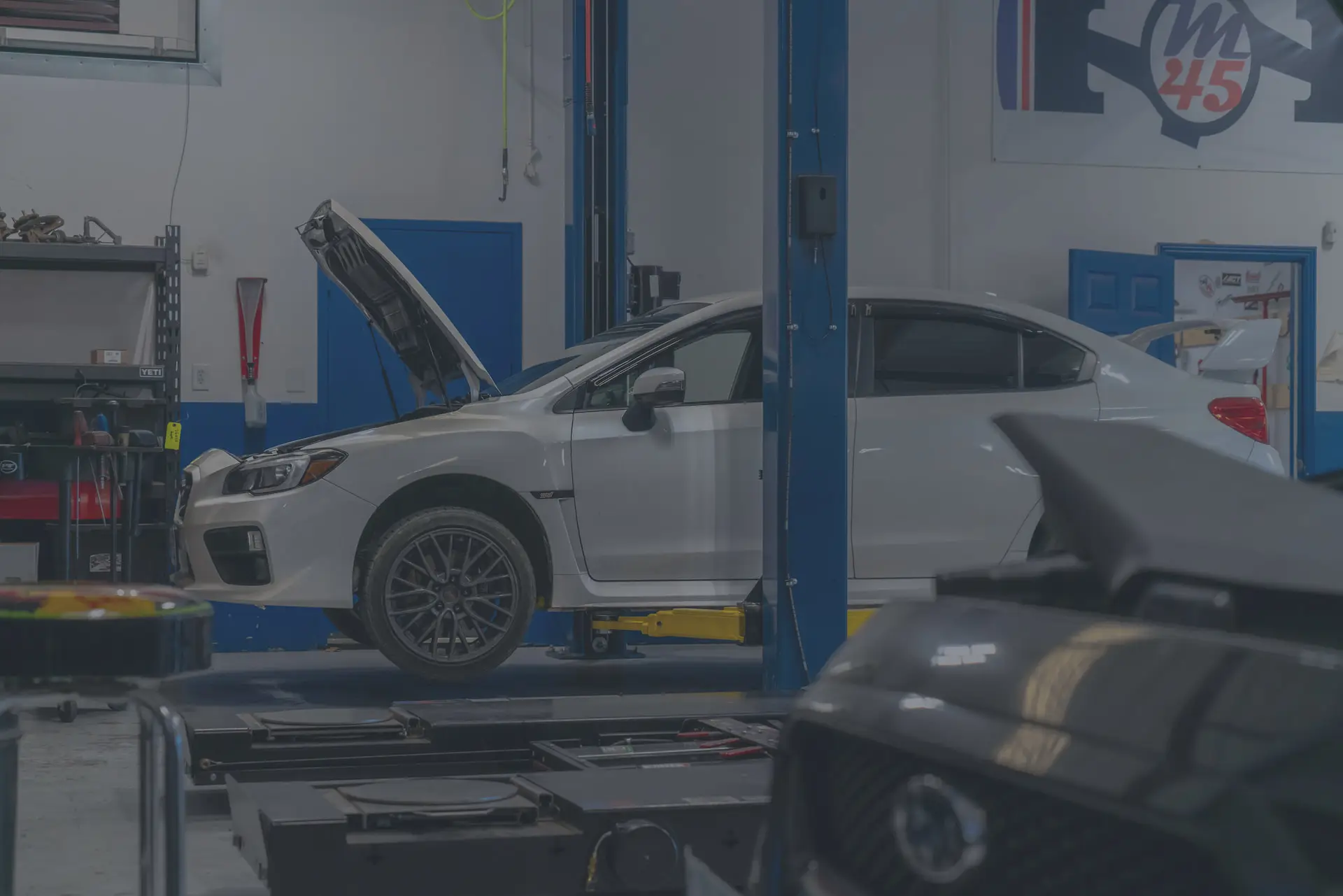
Outback Repair & Service
The Outback is built to go the distance — 150k, 200k, 250k miles and beyond. Getting there requires knowing exactly what each generation needs and when.
High-Mileage Reliability
Doesn't Happen by Accident.
Outback owners tend to keep their cars longer than almost any other Subaru owner — and the cars reward that commitment when the maintenance is correct. We regularly service Outbacks well past 200,000 miles that are mechanically sound because their owners stayed ahead of what each generation requires. We also see what happens when they don't: head gasket failures on neglected EJ25 engines, CVT shudder from fluid that was never changed, and AWD wear from deferred differential service.
The Outback spans several distinct generations with meaningfully different service needs — and the 3.6R H6 option is a different car entirely from the 2.5i. Knowing which engine and generation you have determines your maintenance timeline and your primary concerns. We know all of them.
EJ-Series 2.5i Outback (2000–2012) — Head Gasket & Belt
EJ25 SOHC (2000–2009) and EJ253 (2010–2012). Timing belt engine across all EJ25 variants. The 2000–2009 naturally aspirated EJ25 is among the most head-gasket-prone engines in the Subaru lineup — Phase 2 internal leaks are the defining maintenance event of these cars. Plan for head gasket service, plan for timing belt service. Both are when, not if.
H6 3.6R Outback (2005–2019) — Chain, No Belt, No Head Gasket History
EZ30 / EZ36 H6 engine. Timing chain — no belt interval. No significant head gasket history. The 3.6R is chosen specifically by buyers who want to avoid the EJ25's maintenance concerns. Primary service focus: regular oil changes, differential fluid, spark plugs at 60k, and CVT or automatic transmission service depending on year.
FA-Series 2.5i & Turbo Outback (2013–Present) — CVT Focus
FA20D (2013–2019), FA24DIT turbo (2020+ Outback XT). Timing chain on all. Lineartronic CVT standard on most trims — fluid service every 30k–60k miles is critical. Significantly reduced head gasket risk versus EJ25. EyeSight standard on many trims — calibration required after windshield or suspension work.
Common Outback Services
Head Gasket Repair
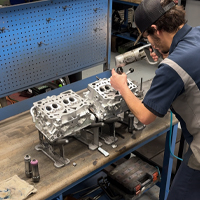
The EJ25-powered 2.5i Outback has the highest head gasket incidence of any Subaru. If your Outback is losing coolant without a visible external leak, showing white exhaust smoke on cold start, or just smells faintly sweet from the exhaust, a combustion leak test is the first step. We perform the complete repair in-house — head resurfacing, updated MLS gaskets, water pump, thermostat, radiator flow inspection, and coolant flush.
Head Gasket DetailsTiming Belt (EJ Outback)
All 2.5i Outbacks through 2012 require timing belt service at 105,000 miles or 8 years. On a car you're planning to keep to 200,000 miles, this is a service you'll do twice — and both times it's an opportunity to replace the water pump, seals, and thermostat while everything is already apart. We plan the job around your car's full maintenance picture, not just the belt.
Timing Belt DetailsCVT Service
2013 and newer Outbacks with the Lineartronic CVT are among the most common CVT service vehicles we see. Outbacks tow, haul cargo, and log serious highway miles — all of which generate CVT heat and accelerate fluid degradation. We recommend fluid service every 30,000–40,000 miles for towing or loaded highway use. Neglected CVT fluid on a high-mileage Outback leads to one of the most expensive repairs on the car.
Transmission & CVT DetailsScheduled Maintenance
Outback owners who keep their cars long-term depend on a documented service history to make the right decisions at each interval. We follow Subaru's factory maintenance schedule exactly — 30k, 60k, 90k, 120k — and adapt it for your specific engine and use pattern. H6 models have different spark plug intervals, turbo models have shorter oil change schedules, and high-mileage cars get closer attention to fluid condition.
Scheduled Maintenance DetailsAWD & Fluid Services
Outbacks used for towing and loaded highway driving put sustained thermal load on the front and rear differentials — the AWD system is working continuously under those conditions. We recommend 30,000-mile differential fluid service for towing or mountain use. Brake fluid every 2 years. Coolant condition checked at every service — degraded coolant on an EJ25 is one of the contributing factors to head gasket failure.
Fluid Services DetailsPre-Purchase Inspection
Used Outbacks are one of the most commonly inspected vehicles we see — and EJ25-powered examples especially benefit from a combustion leak test before purchase. A clean Carfax doesn't tell you whether the head gasket is seeping. We do a thorough 50-point inspection, run a combustion leak test on EJ25 models, check timing belt service status, and review the full drivetrain — giving you the real picture before you sign.
Inspection DetailsThe Shop That Helps You Keep
Your Outback for 250,000 Miles.
Long-Term Ownership Support
We keep detailed service records for every vehicle we work on and use them to advise on upcoming maintenance proactively — not reactively after something fails. Outback owners who treat their cars as long-term vehicles benefit most from a shop that tracks service history and knows what's coming next. That's how cars make it to 250,000 miles without drama.
Every Engine, Every Generation
EJ25 SOHC, EJ253, EZ30, EZ36, FA20D, FA24DIT — we service every Outback engine correctly, with the right parts and the right intervals for each. The H6 3.6R gets different service than the 2.5i. The 2020+ Outback XT turbo gets different attention than a 2015 base model. We don't apply one maintenance template to every Outback that comes through the door.
2-Year Warranty
Every service and repair on your Outback is covered by our 2-year warranty. Head gasket repairs, timing belt work, CVT fluid services, and all associated labor. We use OEM-spec or better parts on everything — because an Outback you're planning to keep deserves parts that will last as long as you intend to drive it.